

Key Takeaways
- The Fed is likely to cut interest rates by 0.25 percent - 0.50 percent on September 18th.
- While rate cuts may reduce returns on cash and savings, they could benefit investments in international stocks, small-cap stocks, and long-duration bonds.
- The overall impact of rate cuts on the market will depend largely on the economic context at the time.
- Diversifying your investments could enhance your portfolio's performance in a falling rate environment.
As the Federal Reserve’s meeting on September 18th draws closer, many investors expect a rate cut of 0.25 percent, though some believe it could be as much as 0.50 percent. This change could reduce the fed funds rate to 4.75 percent - 5.00 percent, impacting money market yields and affecting savers and cash investors. But what does this really mean for your investments?
Market Expectations and Economic Signals
The Fed’s job is to keep employment high and prices stable. To combat the rapid rise in consumer prices we saw starting in 2021, the Fed aggressively raised rates to levels we haven’t seen since before the Great Financial Crisis.
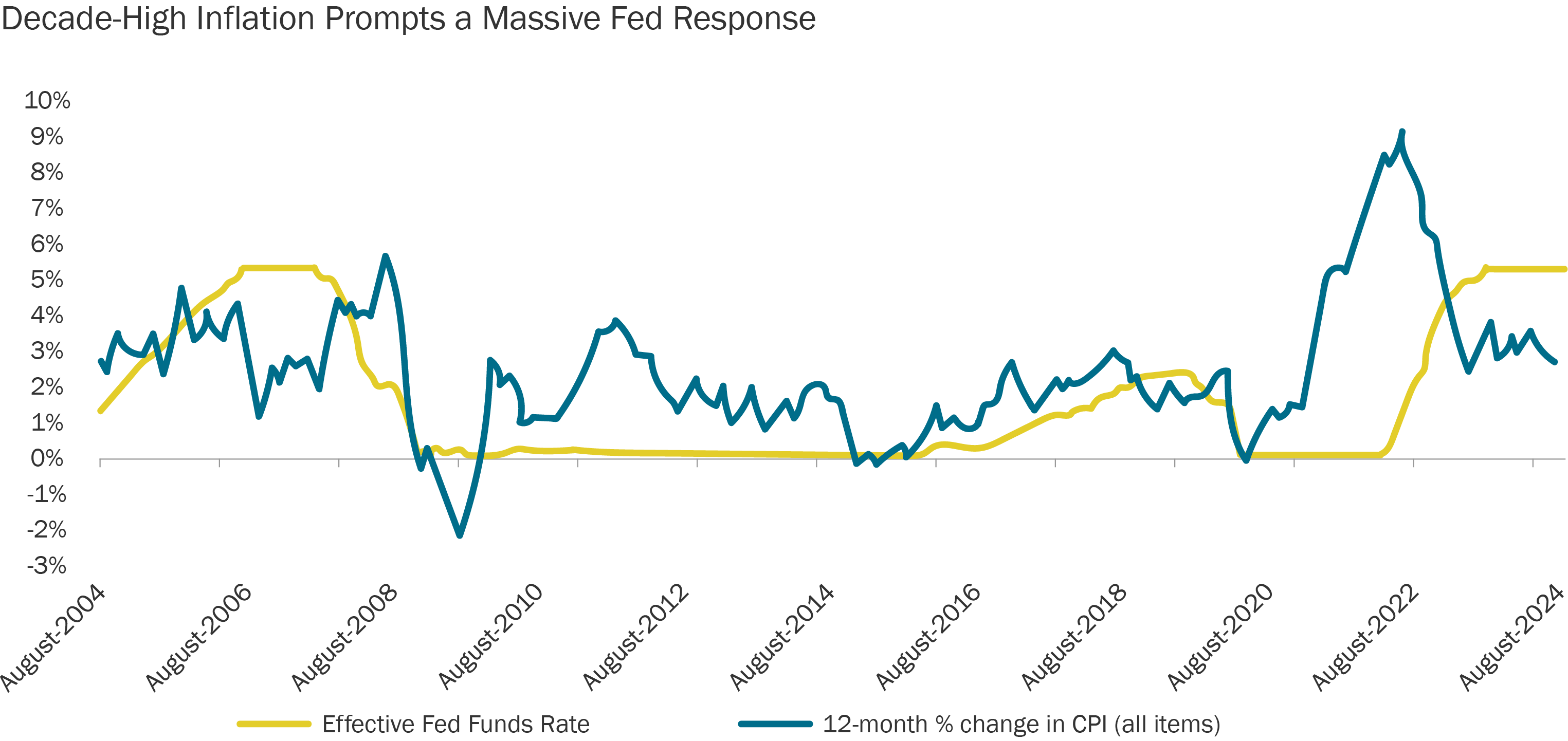
Source: Federal Reserve Economic Data
This hawkish approach seems to be paying off as inflation cools, but it’s also putting pressure on the labor market. With the unemployment rate climbing to 4.3 percent in July 2024 from 3.4 percent in April 2023, and new data showing that the US economy created 818,000 fewer jobs than initially thought, the Fed is now focused on stabilizing the economy and preventing a recession.
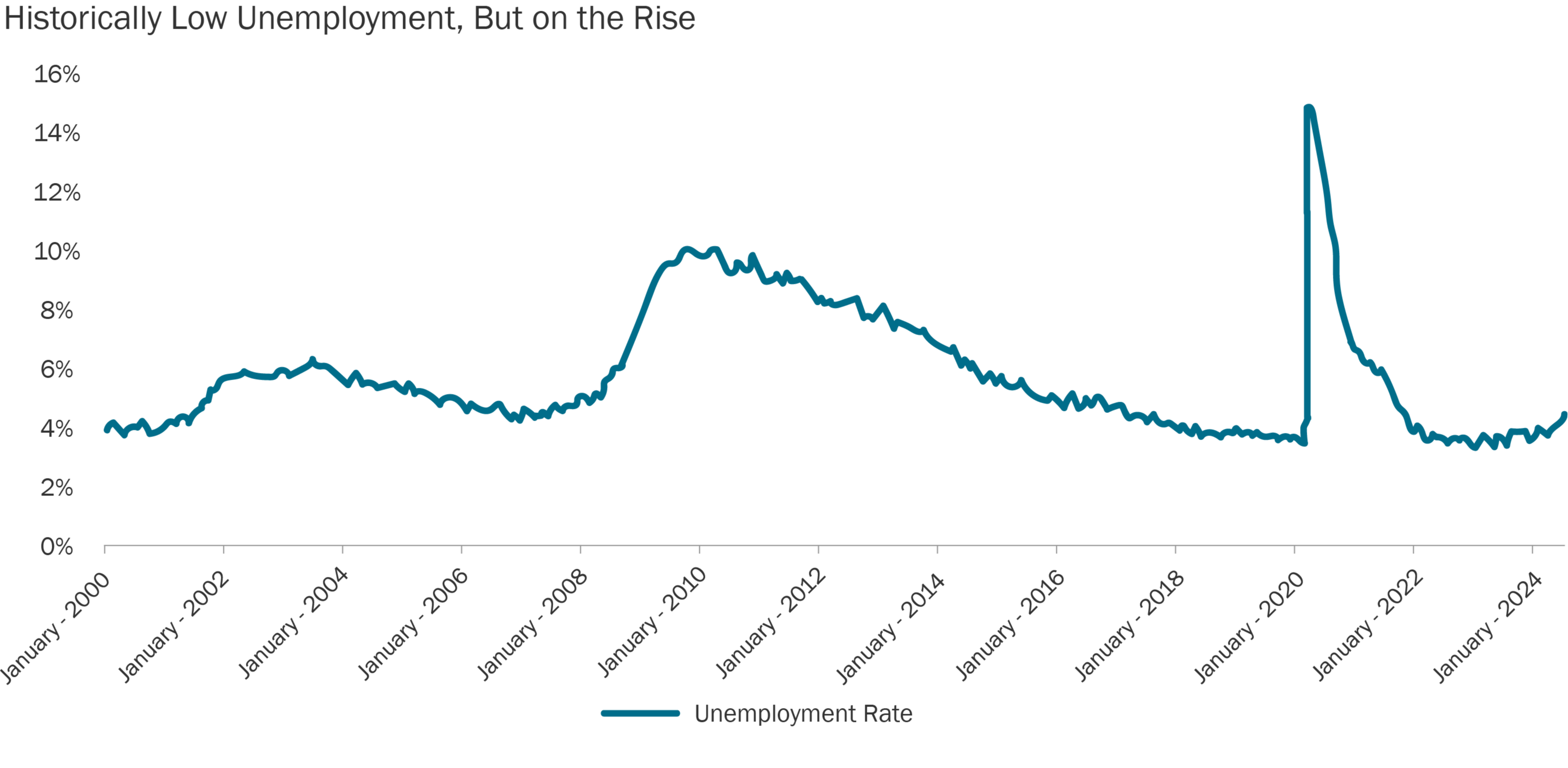
Source: Federal Reserve Economic Data
While the labor market has been slowing, it’s worth noting that this comes after a period of strong job growth. The Fed faces a delicate balancing act: lowering rates to support the economy without reigniting inflation. The size of the rate cut will likely hinge on the upcoming jobs report.
Impact on Consumers and Small Businesses
For consumers, the anticipated rate cuts could provide some relief, particularly for those with adjustable-rate loans. Cheaper financing for mortgages, auto loans, and credit cards may stimulate consumer spending, creating a positive ripple effect throughout the economy. However, savers might see reduced returns as interest rates decline.
US homeowners with fixed-rate mortgages have largely been insulated from rising rates, which has supported consumer spending. Still, lower rates may enable newer homebuyers to refinance their mortgages at lower rates. From a broader economic perspective, lower mortgage rates could stimulate new home sales.
Small businesses, particularly those with higher debt levels, could benefit from lower borrowing costs, leading to growth and increased hiring, which in turn could boost wages and consumer spending.
Impact on Investment Portfolios
For investors, falling rates generally make riskier assets like stocks and bonds more attractive since the returns on cash become less appealing. However, the overall market boost from rate cuts may not be as strong this time around, depending on the economic context. If the cuts are driven by recession fears, markets might stay cautious. But if they’re part of a broader economic normalization, we could see more positive momentum.
Despite the uncertainty, there are specific areas in the market that could benefit from rate cuts, offering potential opportunities.
Opportunities in Specific Asset Classes
- International Stocks
International stocks have been attractively valued compared to US stocks for some time but haven’t performed as well, partly due to the excitement around AI, which has primarily benefited US tech stocks. The strong US dollar has also played a role. When the dollar is strong, it makes US assets more appealing and reduces the value of foreign investments for US investors.
But as the Fed begins cutting rates, this dynamic could change. A weaker dollar would help US investors with international exposure in two ways: it would boost the purchasing power of consumers abroad, potentially driving sales for foreign companies, and it could also lead to currency gains when those foreign earnings are converted back to dollars. This makes international stocks an attractive option for diversification in a shifting market.
- Small-Cap Stocks
Small-cap stocks have struggled compared to large-cap stocks recently, making them relatively cheap. One reason is that smaller companies are more affected by rising interest rates, as they often rely on short-term, variable-rate financing. When rates go up, so do their interest expenses, making it harder for them to grow.
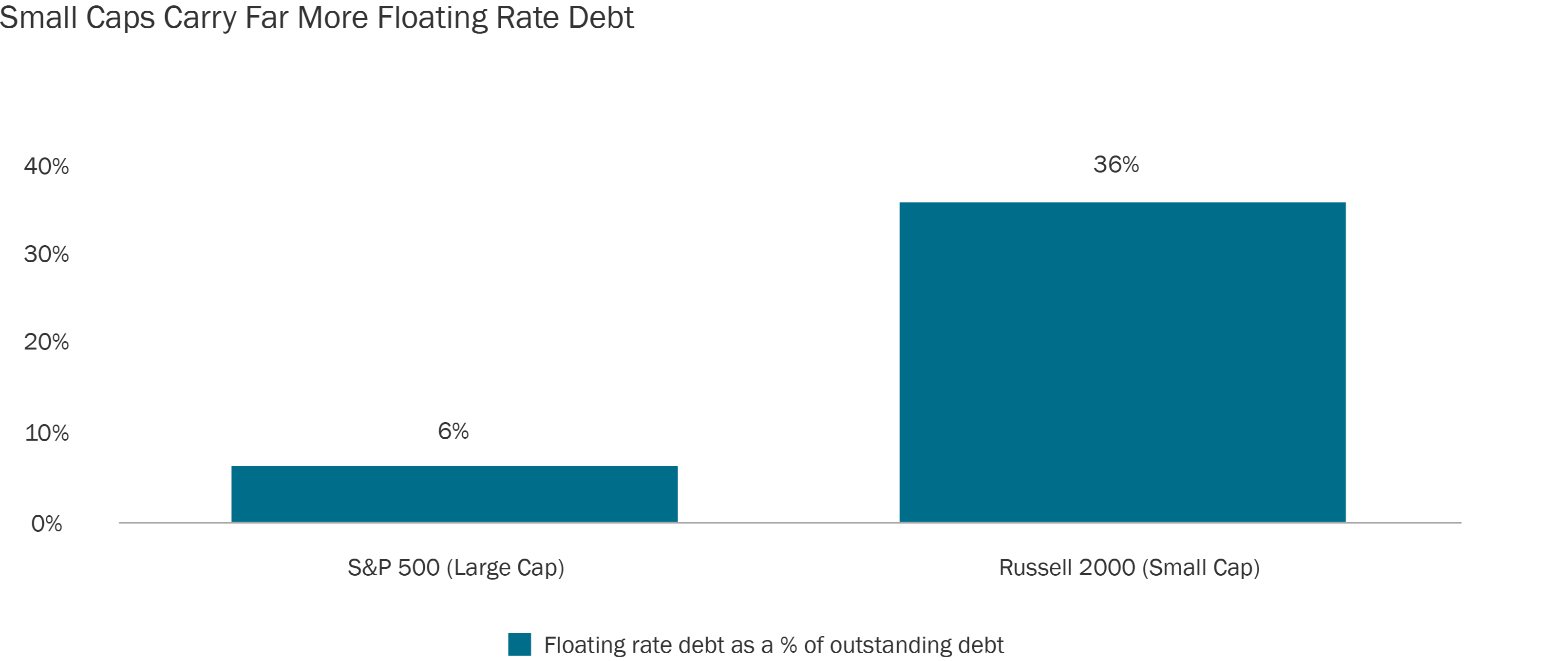
Source: PMFA, Bloomberg.
Large firms, especially in sectors like Big Tech, have fared better than small caps recently because they were able to secure long-term, fixed-rate debt before rates spiked. These companies have also benefited from earning interest on large cash reserves, which has offset some of their borrowing costs. For example, Apple has around $162 billion in cash, comparable to the entire market capitalization of Disney, giving it a significant advantage in a high-rate environment.
But as rates start to fall, small-cap companies could see a significant benefit. Lower interest costs would free up capital for expansion and innovation, making these stocks potentially rewarding, especially if the economic outlook stabilizes.
- Long-Duration Bonds
When interest rates fall, bond prices generally rise. The sensitivity of a bond's price to changes in interest rates is measured by its duration. The longer a bond’s duration, the more sensitive it is to rate changes. For instance, if the Fed cuts rates by 1 percent, a bond with a duration of one year might increase in price by 1 percent, while a bond with a duration of seven years could jump by 7 percent.
While short-duration bonds offer stability, long-duration bonds present a greater opportunity for price appreciation as the Fed starts cutting rates.
Importance of Diversification and Staying Focused on Your Financial Goals
We’re actively positioning your portfolios to navigate the current economic landscape, considering factors beyond just Fed rate cuts. We continue to find international stocks attractive and believe the current environment presents opportunities in key areas of the market. Additionally, we’ve adjusted our bond positioning to better align with expectations of lower interest rates. We are also evaluating the potential for other portfolio adjustments as the Fed’s actions become clearer.
Instead of making investment decisions based solely on this communication, we recommend reviewing your financial plan to ensure it remains aligned with your long-term goals. While rate cuts can present opportunities, they also introduce new risks. We encourage you to discuss strategies with your advisor for navigating this shifting market environment.
Thank you for your trust. We’re committed to helping you make the most of market opportunities while managing potential risks.
All investing involves risk, including the possible loss of principal. There is no assurance that any investment strategy will be successful.
A diversified portfolio does not assure a profit or protect against loss in a declining market.
Additional risks are associated with international investing, such as currency fluctuations, political and economic stability, and differences in accounting standards.
Investors cannot invest directly in indexes. The performance of any index is not indicative of the performance of any investment and does not take into account the effects of inflation and the fees and expenses associated with investing.
The views stated in this letter are not necessarily the opinion of Cetera Advisor Networks LLC and should not be construed directly or indirectly as an offer to buy or sell any securities mentioned herein. Due to volatility within the markets mentioned, opinions are subject to change without notice. Information is based on sources believed to be reliable; however, their accuracy or completeness cannot be guaranteed. Past performance does not guarantee future results.