

Key Takeaways:
- Diversification’s Comeback – After years of mega-cap tech dominance, 2025 is rewarding diversified investors as global markets take the lead.
- Market Surprises – The AI-driven tech rally faltered, international stocks surged, and economic uncertainty has driven shifts across asset classes.
- Portfolio Performance – Diversified portfolios are up 1-2 percent YTD, with international stocks, REITs, and bonds balancing weaker US large caps.
- Strategic Adjustments – SageView is trimming small-cap and overall stock exposure amid rising recession risks while maintaining a cautious yet flexible approach.
So far in 2025, diversification is proving its worth. The past few years haven’t been easy for diversified investors, as US markets have been increasingly dominated by a handful of mega-cap tech stocks. That concentration made it tough for investors holding a broader mix of assets. But trends don’t last forever—2025 is shaping up to be the year diversification makes a comeback.
Markets So Far in 2025: A Few Big Surprises
The AI-fueled tech rally hit a major speed bump when DeepSeek—a Chinese AI competitor—burst onto the scene. It proved just as powerful as today’s leading models, but at a fraction of the cost. Investors quickly concluded US tech valuations may have run too hot, sending shares of major players tumbling.
Meanwhile, global markets are having a moment. As concerns over the US economy mounted—fueled by trade war fears, rising delinquencies, and layoffs—international markets got a boost from fresh stimulus in China and Germany’s increased defense spending. The result? By March 7, international stocks had outpaced the S&P 500 by more than 9 percent (!)—aided in part by currency movements as the dollar tumbled.
Year-to-Date Performance Across Key Asset Classes
At SageView, we design portfolios that span major asset classes to help clients navigate shifting markets. We offer portfolios built with active mutual funds, indexed ETFs, or a mix of both. While all our portfolios follow a long-term strategic framework, our Dynamic portfolios also make tactical shifts to capitalize on shorter-term opportunities.
Through March 7, our diversified portfolios have held up well, with most SageView portfolios up 1-2 percent year to date (gross of advisory fees). While US large-cap stocks have struggled, other asset classes have provided a counterbalance:
- International Stocks → A standout performer, lifted by global stimulus and currency appreciation.
- REITs → Benefiting from shifting rate expectations and demand in key global markets.
- Bonds → Gaining as investors seek stability amid rising economic uncertainty.
- US Small- & Mid-Cap Stocks → Lagging due to increasing recession fears, which put pressure on smaller businesses with less financial flexibility.
Year-to-Date Performance, Select Asset Classes*
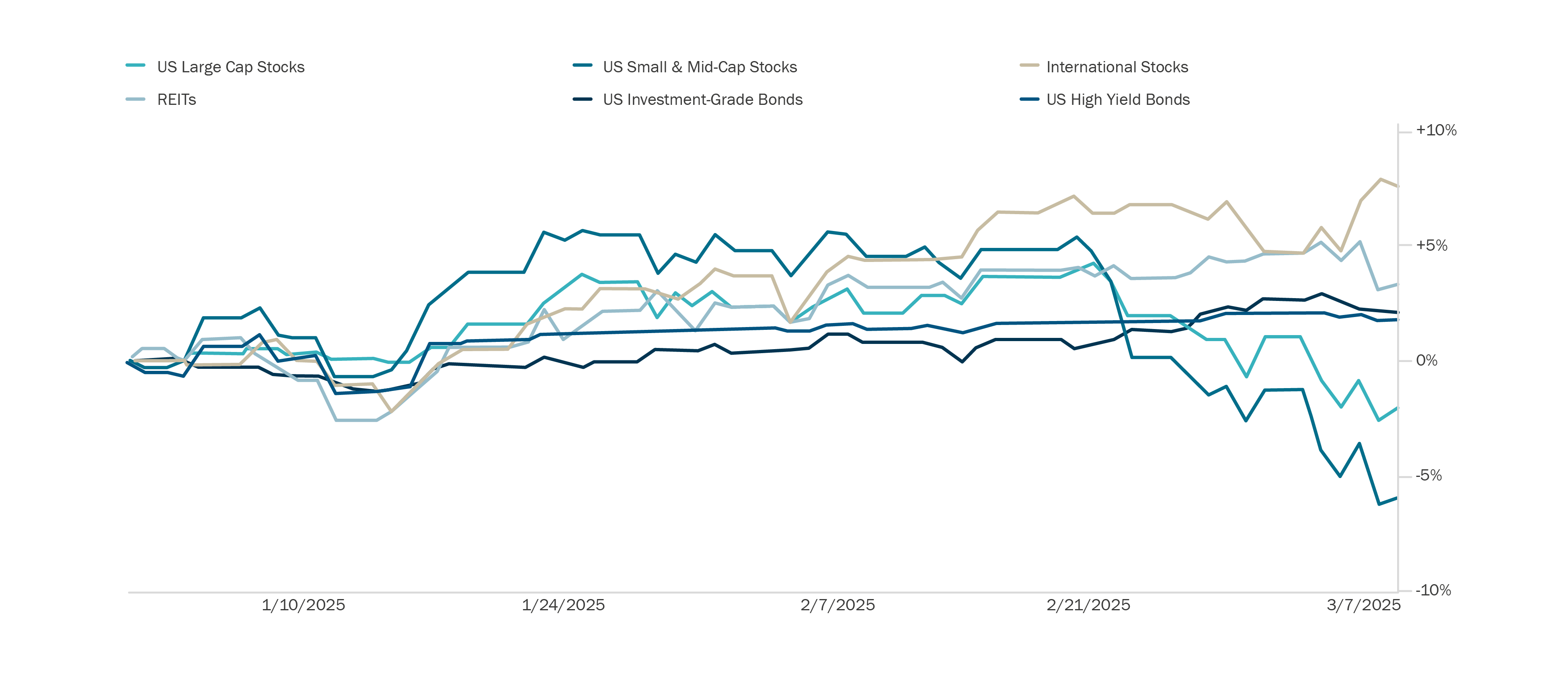
Source: Morningstar Direct. US Large Cap Stock returns are based on the S&P 500 Index, US Small- & Mid-Cap Stock returns are based on the S&P Completion Index, International Stock returns are based on the MSCI ACWI ex USA IMI, REIT returns are based on FTSE EPRA Nareit Developed Index, US Investment-Grade Bond returns are based on the Bloomberg US Aggregate Bond Index, and US High-Yield Bond returns are based on the Bloomberg High Yield Corporate Index.
Adjusting Our Positioning: A Shift in Small Caps and Stocks Overall
We’ve been overweight small-cap stocks for about six months believing that attractive valuations and potential rate cuts could provide a tailwind. But we’re reevaluating this bet. Small caps tend to be hit hardest in downturns, and with rising recession risks, we’re preparing to neutralize this position.
At the same time, we’re reducing overall stock exposure in client portfolios. Several economic red flags have emerged—falling job openings, depleted household savings, high mortgage costs, and rising layoffs. Add in trade war concerns, and the uncertainty is mounting. This isn’t a doomsday call, but it is a time for caution.
Impact of Dynamic Positioning on Performance
Across SageView’s Dynamic suite of portfolios, we periodically adjust asset weightings based on market conditions. So far in 2025, here’s how our tactical positioning has played out:
- ✅ International Overweight → Positive Impact
Maintaining an overweight in international stocks has significantly contributed to performance as global markets take the lead. - ✅ Value Over Growth → Positive Impact
We leaned into value stocks over growth, expecting expensive tech names to be vulnerable. That call has paid off as investors rotate into lower-valuation sectors. - ❌ Small Cap Overweight → Negative Impact
We overweighted small caps in late 2024, expecting rate cuts to provide support. With the Fed holding firm and recession risks rising, small caps have struggled. We’re now shifting toward a neutral stance. - ✅ Underweight High-Yield Bonds → Positive Impact
We’ve remained underweight in high-yield (“junk”) bonds due to insufficient compensation for credit risk. With recession fears rising, this positioning has added value.
Looking Ahead: Cautious, But Ready
The economic landscape is more uncertain than it was a year ago, but our diversified approach is proving its worth. We’re making adjustments where needed—trimming small-cap exposure, dialing back stock exposure overall, and keeping a close eye on fixed income opportunities.
Markets are always evolving. Our job is to ensure client portfolios remain well-positioned—whether that means capitalizing on opportunities or reducing risk when needed. We’ll continue to monitor developments and adjust as conditions change.
If you have any questions, reach out to your SageView advisor.